
Finding People Across Utah Records
Utah records are split by keeper. State courts, Vital Records, Corrections, professional licensing, and the Archives offer broad tools. Deeds, assessor rolls, marriage licenses, jail rosters, permits, and many older files remain with one of Utah's 29 counties or its cities. Begin with the place tied to the event, property, or case. A postal city alone can mislead because ZIP areas can cross city and unincorporated county lines.
A full name is most useful in court, license, business-principal, and historic directory searches. An old address points first to the county assessor, then the recorder and city directories. A case number, parcel ID, document number, or book and page is even stronger. Keep those identifiers as the search moves from an online index to a clerk, counter, microfilm reel, or written request.
- Write down the person's full name, name variants, approximate dates, and every known Utah county or city.
- Choose the record that answers the question. Courts connect parties to cases, while property rolls connect owners to parcels.
- Extract a durable ID, such as a case number, parcel ID, legal description, or document number.
- Ask the retaining office for the underlying file when the index gives only a summary.
- Use Archives, library, counter, mail, or GRAMA channels when the digital trail ends.
Utah People Search Record Keepers
The Office of Vital Records and Statistics keeps statewide birth and death certificates and a limited window of marriage and divorce abstracts. Utah State Archives preserves permanent government series and offers name indexes, research guides, and reference help. Business and principal searches belong to the Division of Corporations. County recorders, assessors, clerks, treasurers, and sheriffs still hold the local layer. Detailed access rules belong with the Utah public records system, but the first routing choice is always the office that retains the record.
Each Utah county office answers a different question. A recorder documents a transfer, lien, release, or plat. An assessor shows an ownership and value snapshot for an assessment date, while a treasurer tracks tax billing and payment. County clerks issue local marriage material and administer elections. District court clerks retain probate, divorce, civil, and criminal files. The Archives may hold older books or microfilm after a Utah agency transfers them, but it does not act as a clearinghouse for current requests.
Utah State Archives
Permanent state and transferred local records
Catalogs, name indexes, and research guides
Division of Corporations
Statewide business and principal records
Entity, trademark, and UCC search routes
Why Utah Searches Need a County
There is no single Utah owner-name or grantor-grantee database. Each county recorder maintains recorded deeds, trust deeds, releases, liens, plats, and related indexes. Assessors hold owner, parcel, situs, mailing, and valuation data. County clerks handle many marriage records and elections, while local sheriffs hold pretrial jail information. The official county recorder directory supplies the correct county office and available map or record links.
Jurisdiction also changes with time. Utah Territory existed before statehood, county boundaries shifted, and remote places were sometimes attached to another county. A historic record may sit with a predecessor county, a successor office, or the Archives. Check the creating agency's history before deciding a missing online hit means no record exists.
Key Utah rule. Identify the county from the event, parcel, address, or case before choosing a portal or writing a request.
Utah Parcel Search to Deed
An address trail begins with geography. The free Utah State Parcels map helps locate a county and parcel, but its boundaries are informational and county completeness varies. The statewide layer usually shows a generalized owner type, not a person's name. Confirm the named owner and tax mailing address in the county assessor roll, then take the parcel ID or legal description to the county recorder.
| Utah parcel field | Use in a search | Limit |
|---|---|---|
| County | Narrows the map | Does not replace county records |
| Street address | Finds a likely parcel | May change after a split |
| City or ZIP | Adds place context | Postal borders are not legal borders |
| GNIS place | Finds a named feature or area | Not an ownership field |
The state parcel interface shows how Utah people search work moves from a modern address to a county record.
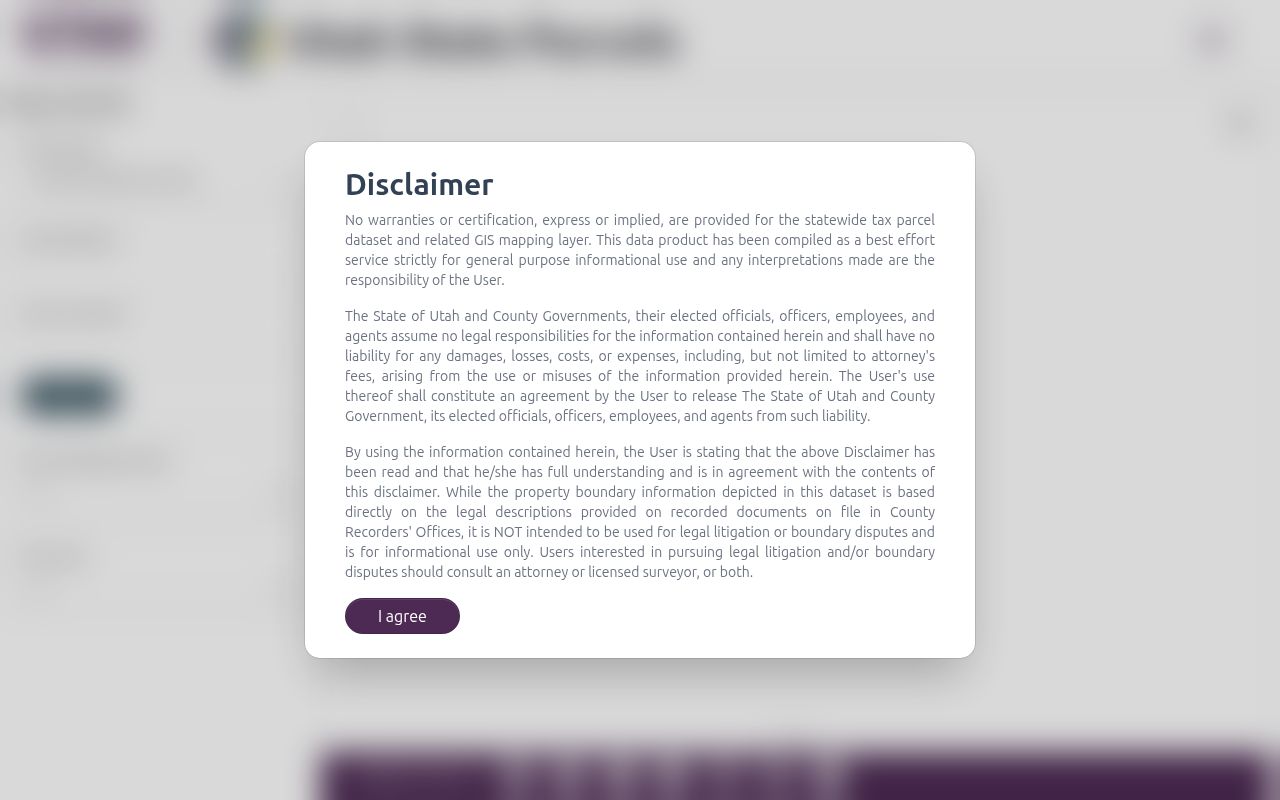
Once the county is clear, use the local roll for owner names and the recorder for the title chain.
From Utah Parcel to Prior Owners
A deed chain works best with durable land identifiers. Record the parcel ID, subdivision and lot or section-township-range description, current owner, prior grantor, document number, and book and page. A grantor transfers an interest; a grantee receives it. A legal description identifies the land more reliably than a street label. Follow each grantor backward through the county index, then request any image not offered online.
Salt Lake County illustrates why Utah access varies. Its POLARIS recorder interface is login-gated, so anonymous search fields and coverage could not be verified from the public screen.
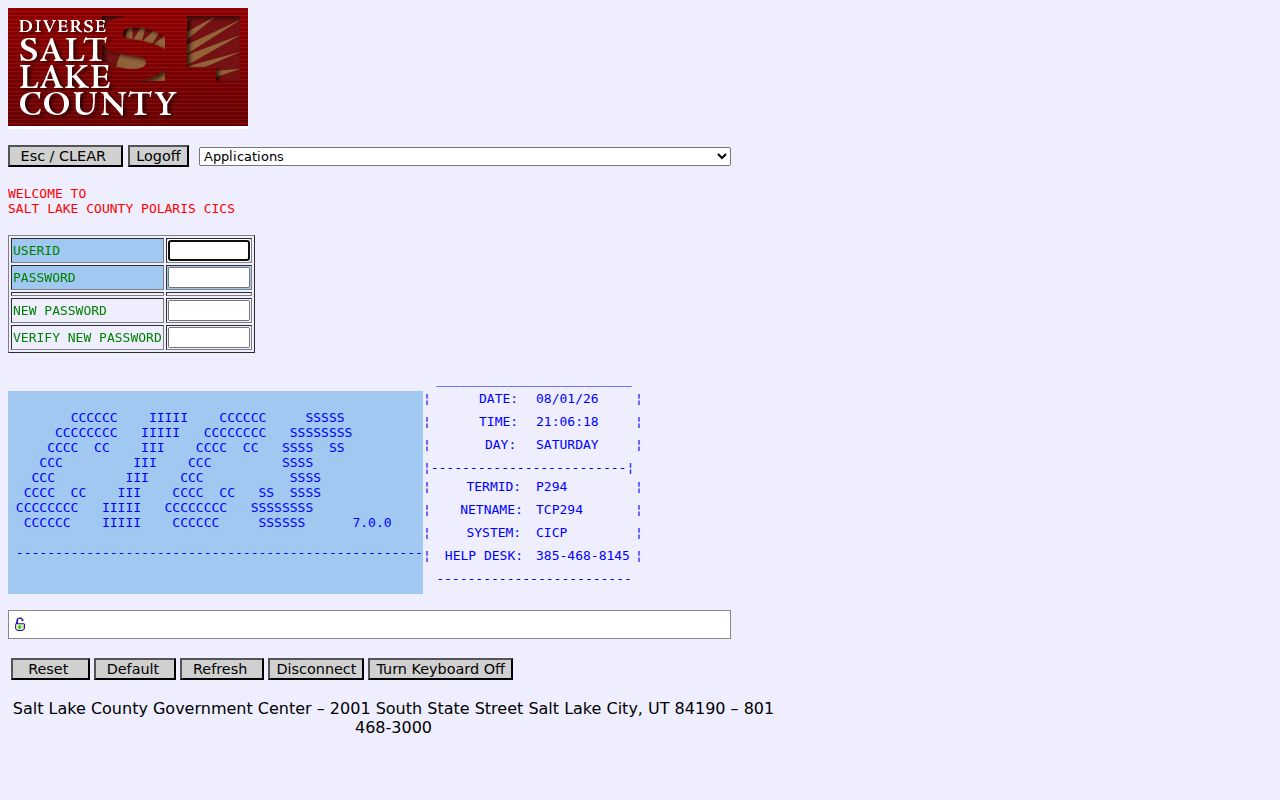
A counter, phone call, mail request, or Archives land guide remains part of the workflow when a county portal hides fields or older images.
- Parcel ID
- The county identifier that joins map, assessment, and tax data.
- Situs address
- The physical parcel location, which can differ from the owner's mailing address.
- Grantor and grantee
- The parties transferring and receiving an interest in a recorded instrument.
- Index and image
- The index summarizes a filing; the image is the recorded document itself.
Searching Utah Court Records by Name
Utah district courts hear general trial matters, including probate and divorce. Juvenile courts are separate, and justice courts serve counties or municipalities. Xchange is the paid statewide public repository. Search by party name, then narrow a common name with county, court location, case type, filing dates, or disposition dates. A result can lead to case number, party roles, status, docket entries, and available documents.
MyCourtCase serves a different need. It is free but requires a case number, email, and identity check because it is for a party to that case. Xchange omits adoption, civil mental-health commitment, juvenile, sealed or expunged cases, and some older justice-court matters. The clerk remains the source for a complete public file, certified copy, archived matter, or explanation of a restriction.
| Court | Covers | Name Search | Access |
|---|---|---|---|
| District courts | Civil, criminal, probate, divorce | Xchange | Paid web access or many court terminals |
| Justice courts | Assigned local matters | Xchange where covered | Portal plus local clerk |
| Juvenile courts | Juvenile matters | No open name search | Restricted by law |
Xchange Fields for Utah People Search
The official Xchange access page explains both the party search and its limits. A name query costs money, results stop at 500, and clicking a public party may reveal party details. Search name variants separately. Once a case number is known, ask for named docket entries instead of a whole large file.
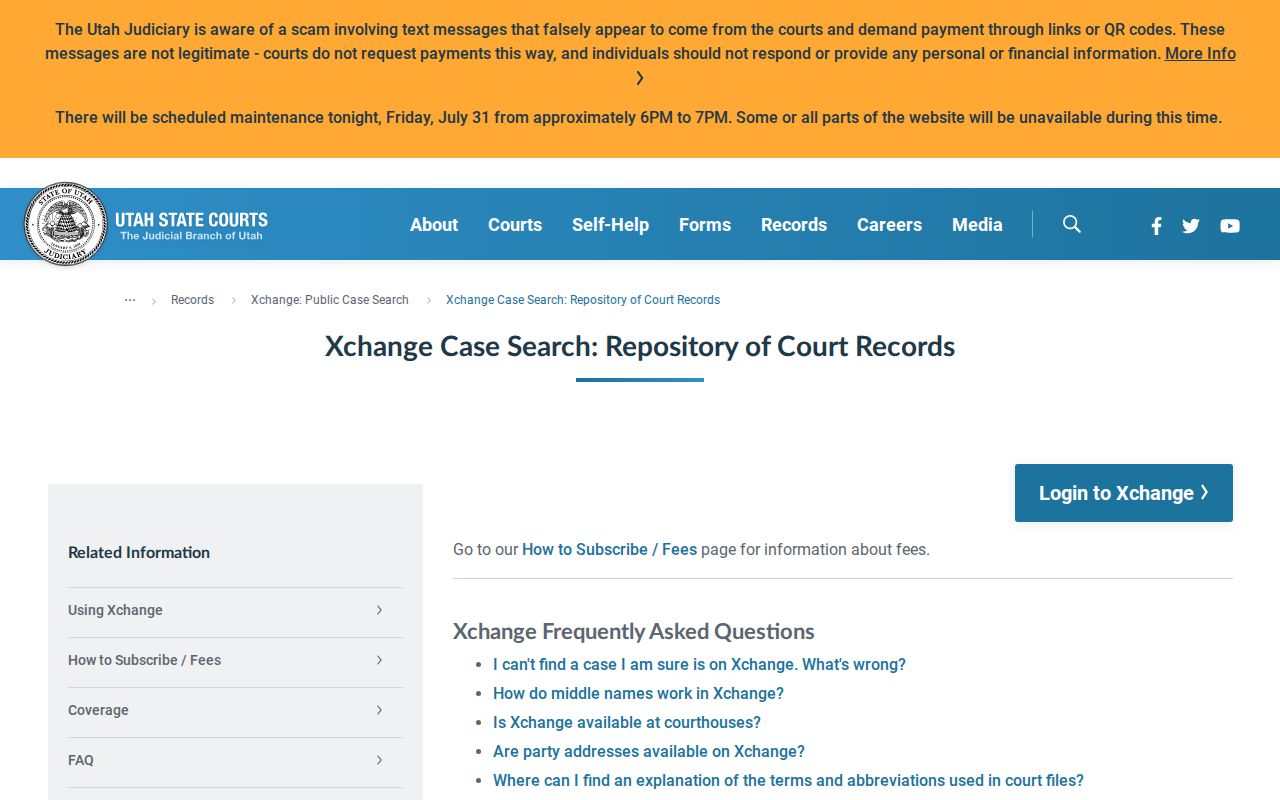
The screen is an index route, not proof that every filed paper has an online image.
| Name | Public party-name criterion |
|---|---|
| County or court | Optional place filter |
| Case type | Narrows the kind of matter |
| Filing dates | Limits when the case began |
| Disposition dates | Limits when the case ended |
Utah Probate Trails to Heirs
Probate can connect a decedent with a personal representative, heirs, devisees, creditors, addresses, and property. Start with a party name in Xchange, record the district court and case number, then ask the clerk for public petitions, notices, inventories, distributions, wills, or linked deeds. A docket is the chronological list of case events and filings. It is not the full file.
Older probate routes differ. Utah State Archives offers guides and named indexes, while FamilySearch includes Utah probate material with county-variable coverage. Search the county and time period that existed when the estate was handled. Correlate the case with obituaries, cemetery files, land records, and city directories, since each source can use a different name form or address.
Tracing Utah People Through Vital Records
Utah Vital Records holds births and deaths from 1905 forward, plus marriage and divorce abstracts for 1978 through 2010. County clerks handle marriage records outside that abstract window, and district courts hold divorce files. Recent certificates require an eligible relationship or direct interest, identification, and the appropriate application. A certificate search fee is kept even if the office finds no record.
Utah law opens birth records after 100 years, death records after 50 years, and marriage or divorce records after 75 years. Legally public does not always mean fully name-indexed online. Utah State Archives may offer a name search, a date-and-county browse, Soundex books, or reference help depending on the year. Before statewide recording, county registers, churches, cemeteries, and newspapers carry much of the trail.
Unnamed Births in Utah Search
Early birth records hold a useful Utah quirk. A certificate may omit the child's given name, so searching only for the later adult name can fail. The Archives historical birth search covers a strong early name-search window and also points to browse and index methods for later public years.
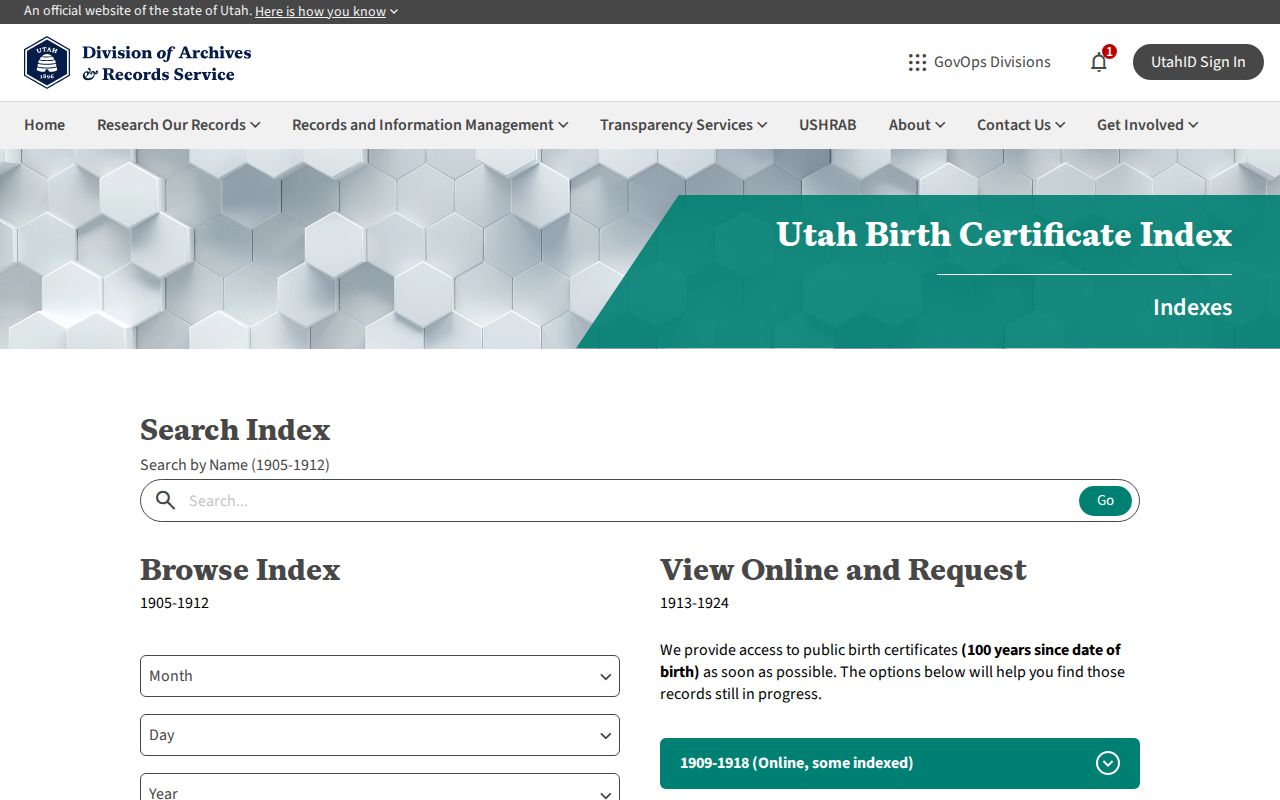
Search parents' names, county, and approximate date when the child's name is absent or indexed in an unexpected form.
Utah Business and License Search
A business name can become a person lead through the Utah Division of Corporations. Its search choices include entities, registered principals, trademarks, and UCC filings. The registered-principal route can connect a person's name with associated businesses, but a registered agent is not automatically the owner. Read the role and filing date before treating two names as the same person.
The DOPL license lookup searches regulated professionals by name and profession or by license number. It can show status, dates, location, and discipline links. Search all credentials because an expired lower credential may sit beside a current higher one. The free lookup is informational; DOPL also offers paid official verification.
Search mechanics differ. DOPL supports a name that begins with the entered text or a containing wildcard, plus a profession hierarchy. Its license-number mode accepts a core number and an optional four-digit suffix. Utah's employee directory is narrower and requires both first and last name. Business list products also differ from the free entity lookup, so use the ordinary portal unless a full data extract is actually needed.
Utah Corrections Name Lookup
The Utah Department of Corrections Offender Search accepts a name or offender number. It covers people under Corrections supervision, not every person held in a county jail. Unsentenced county detainees belong to local sheriff systems, and Utah has no single statewide pretrial jail roster.
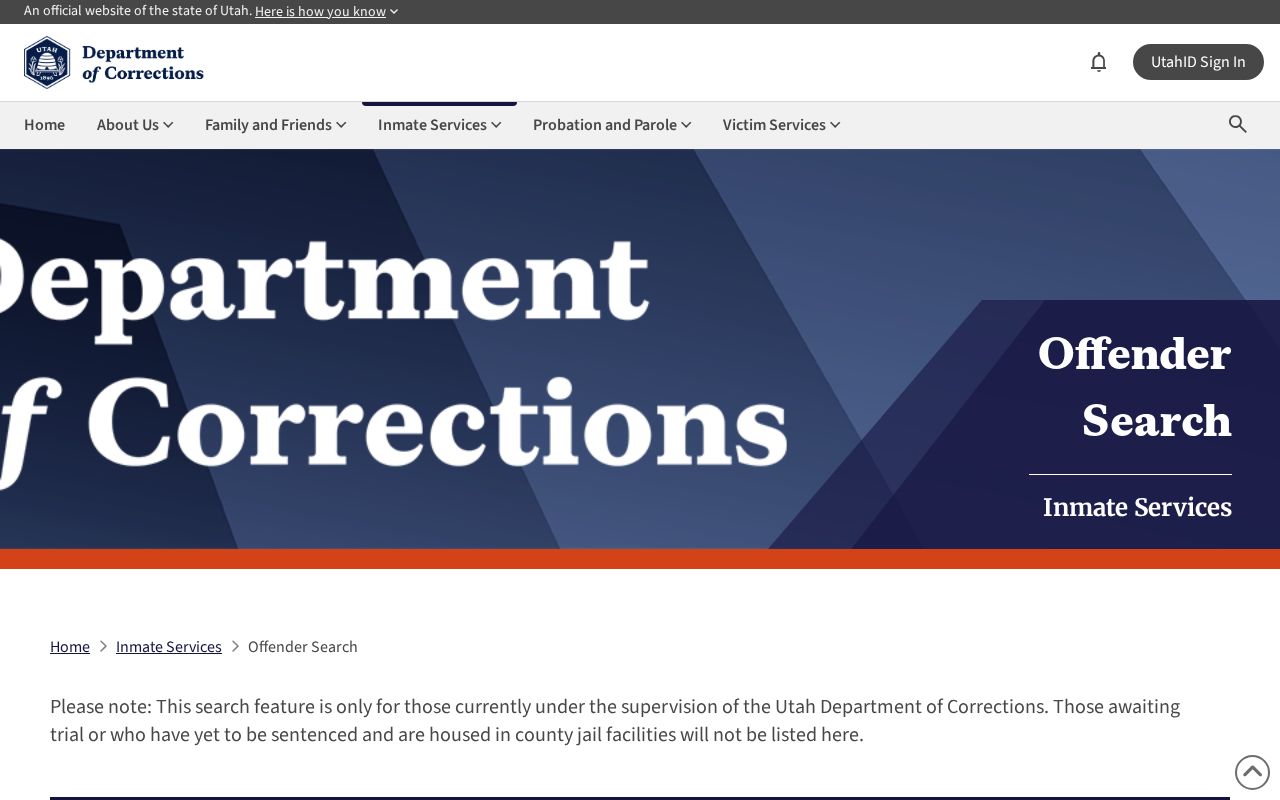
When the state search does not fit the person's custody stage, identify the arresting county and use that sheriff's roster, phone, counter, or records request.
Use records lawfully. Public access never permits stalking, threats, surveillance, or efforts to defeat protected-address programs.
Utah Directories Beyond Government Indexes
Historic directories can distinguish people who share a name by residence, spouse, trade, firm, or neighborhood. Utah's digitized city-directory examples reach from an 1867 regional volume through verified 1980 examples. Editions do not form one proven continuous run, and their geography changes. A 1970s suburban book may group communities differently from a current city map.
The Utah Historical Society also holds yearbooks, telephone directories, manuscripts, newspapers, railroad payrolls, pioneer questionnaires, portraits, and oral histories. These sources can reconnect families when vital indexes fail. A fuller comparison of current and historic collections appears in the Utah local directories resource.
The 1867 G. Owens volume is a good Utah example because it lists Salt Lake residents while also carrying business information for Provo, Springville, and Ogden. Later Polk volumes cover changing suburban groups. Choose the edition that fits the historic geography, then compare alphabetical name entries with any street-based arrangement. Newspapers add obituaries, marriage notices, legal notices, and community columns. Utah collections include Deseret Evening News, Broad Ax, Intermountain Catholic, Japanese-American and Topaz titles, and many locality papers.
When Utah Digital Search Ends
Online absence is weak evidence. A name may use another spelling, a series may predate the portal, the image may be gated, a justice court may have joined CORIS later, or an old file may have transferred to Archives. Search variants and date ranges first. Then ask the keeper about index coverage, courthouse terminals, counter books, mail forms, microfilm, or a specifically described file.
| Access route | Best use | What to preserve |
|---|---|---|
| Online portal | Fast index and identifiers | Result date and record number |
| Office counter | Older books, terminals, clerk help | Volume, reel, or case reference |
| Archives or library | Transferred and historic sources | Series, edition, year, jurisdiction |
| Written request | Existing records not otherwise supplied | Request, receipt, fee estimate, response |
The Utah Open Records Portal can route a GRAMA request, but it is not the custodian. An agency email, mail address, hand delivery, or its own web form may also be valid. Download supplied records promptly and keep the response. A careful Utah people search treats each index as a lead and each official file as a separate level of proof.
A useful Utah request names the record, person, date range, division, and any case, parcel, or document number. Ask for an existing file rather than an answer that would require new research. Request reasonably segregable public portions when one file mixes open and protected material. Utah agencies may charge approved actual costs for search, retrieval, formatting, or copies, though ordinary inspection, disclosure review, and the first 15 staff minutes are generally free under GRAMA. Preserve the request, receipt, fee estimate, delivery details, and any denial for a chief administrative officer appeal.